Floor Squeegee vs Mop: When Each One Wins
Put a floor squeegee vs mop side by side and the difference is not quality. It is job description. One tool pushes liquid from here to there. The other loosens dirt, lifts it, and leaves a floor that is genuinely clean once it dries. Get that split right and your range answers the question buyers ask every season: which one do I shelf, and in what quantity?
The short answer: water removal versus scrubbing
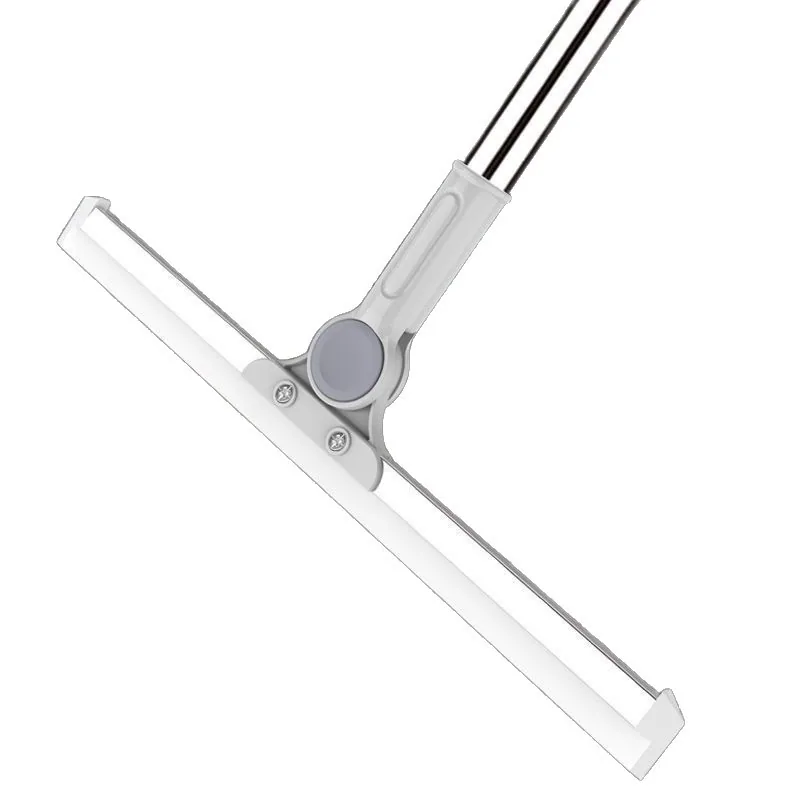
A squeegee is a blade on a handle. Wikipedia describes it plainly as a tool with a rubber blade used to pull water or other liquids across a flat surface (Squeegee, Wikipedia). No bristles. No absorbency. Its main job does not need detergent at all.
A mop is an absorber. It carries water and cleaning solution to the floor, loosens soil, then picks the dirty mix back up. Flat mops, string mops, sponge mops and spin mops all do that differently, and the way each one holds water decides which floors it can safely touch (Mop, Wikipedia). Wet cleaning with water and detergent is the standard route for soil that has bonded to the surface rather than sitting loosely on it (Floor cleaning, Wikipedia).
Blunt version. If the floor is wet, a mop is the wrong tool. If the floor is greasy, a squeegee just moves the grease around.
Where a floor squeegee wins
Bathrooms and wet rooms
Tile and stone after a shower hold water in a thin film, and in a room with weak extraction that film simply sits there. A squeegee clears it in a handful of passes and sends it into the drain or the shower tray. The floor is walkable far sooner than if you left the water to evaporate. Grout lines still want a brush, but the bulk of the water is gone in seconds.
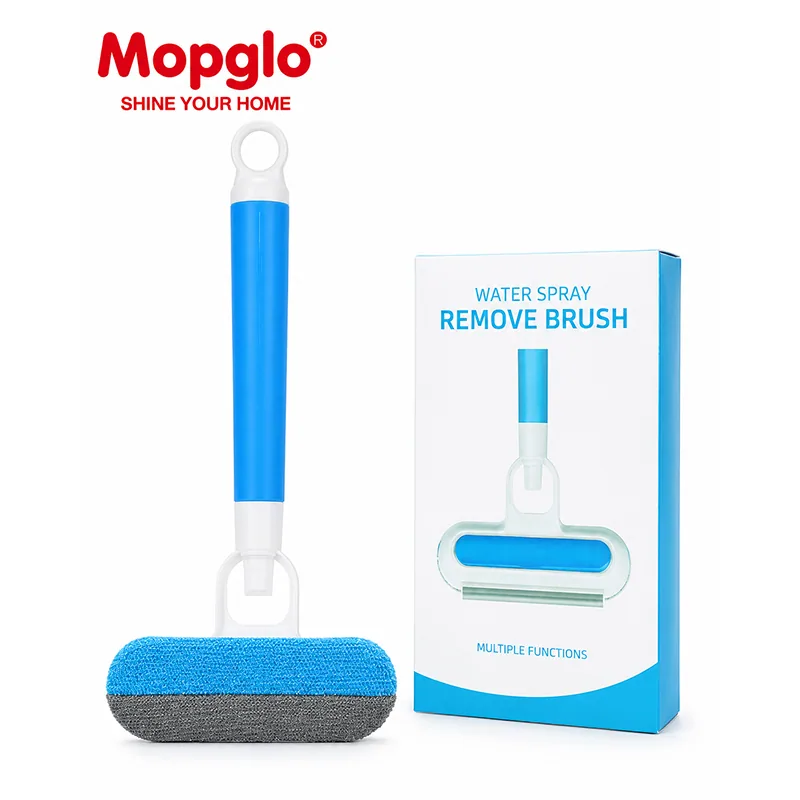
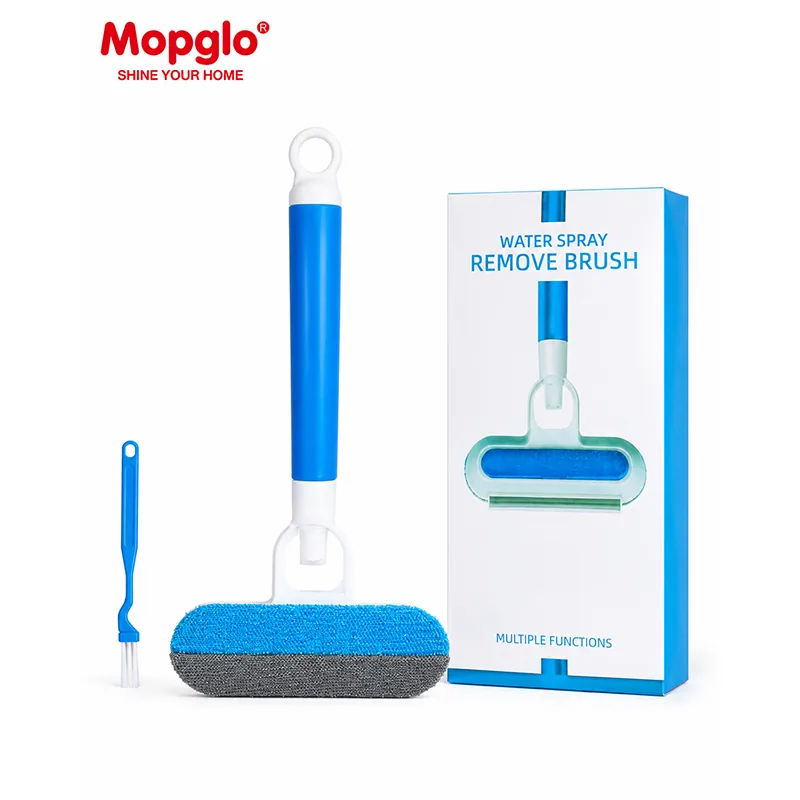
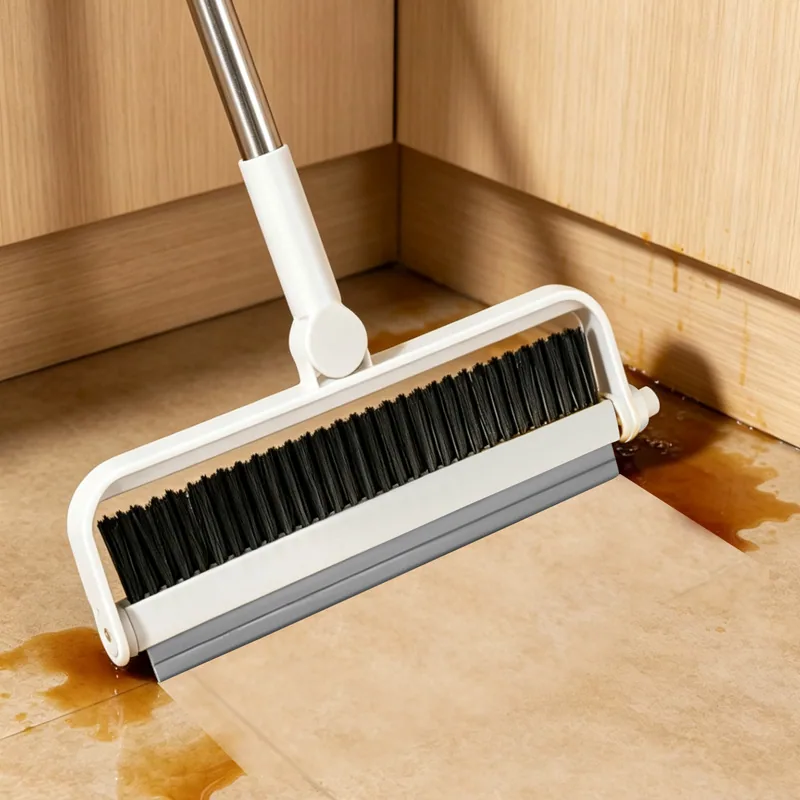
That is the easiest squeegee sale in the household channel. It is also where the 2-in-1 format earns its shelf space: a squeegee and scrub brush on one handle lets the user scrub the grout and pull the water away without swapping tools.
Garages, workshops and outdoor slabs
Concrete, sealed screed, painted workshop floors, loading bays. Water arrives here from rain, from washing a car, from a machine leak, from a hose-down at the end of the day. A squeegee with a firm blade and a stiff handle pushes that volume out of the door. A mop would need ten trips and be filthy by the third. Go wider on the head here, and favour rubber or foam over a soft silicone strip, because rough concrete eats soft edges.
Anywhere with a drain
Restaurant kitchens, food prep rooms, car washes, gym changing rooms, pool surrounds. If the water has somewhere to go, a squeegee gets it there quickly. It does not need rinsing between passes and it does not go sour in a bucket overnight.
Where a mop wins
Mops win on soil that has to be lifted, not moved. Food spills, sticky patches by a door, foot-traffic grime across a sales floor. The mop head agitates, absorbs and carries the dirt away in the bucket water. No squeegee can do that.
Mops win on area too. Long corridors and open retail floors are slow work with a 45 cm blade and quick with a wide flat mop. And the dry-mop habit, dust and debris off the floor without water so people can walk straight back on, is a mop job from start to finish. Cotton yarn mops suit heavy wet work. Flat microfiber pads suit fast passes and even solution spread. Steam mops should stay off unsealed wood and laminate.
Drying time, slip risk and why buyers care
Standing water is a drying problem before it is a cleaning problem. A mop leaves a damp film, especially on tile and smooth concrete. A damp film means a closed bathroom stays humid and a public floor stays wet while customers walk on it. A squeegee takes the water away instead of spreading it thin. Different failure mode, much shorter window of risk.
That argument sells in commercial channels, where the buyer is thinking about a wet floor around shoppers, and in household channels, where the buyer is tired of a bathroom that never quite dries. Same product, two different pitches.
Squeegee or mop: the comparison
| Factor | Floor squeegee | Mop |
|---|---|---|
| Main job | Move liquid to a drain or out of the door | Loosen soil with water and detergent, then absorb it |
| Best floors | Tile, stone, sealed concrete, workshop floors, wet rooms | Tile, vinyl, sealed hard floors, general indoor traffic areas |
| Scrubbing power | None on its own unless paired with a brush | Good, especially with an abrasive pad |
| Water left behind | Thin film, dries quickly | Damp film that can take much longer to clear |
| Consumables | Blade wears eventually; no chemicals needed | Heads and pads wear; detergent used every time |
| Large areas | Fast for water, poor for dirt | Fast for cleaning, slow for water |
| Grout and corners | Blade sits flat, misses grout lines | Bristles and pads work into texture |
| Typical buyer set | Household bathroom, garage, janitorial, car wash | Household kitchen, retail, office, contract cleaning |
Read that table down, not across. Most end users need both tools. Plenty of ranges under-stock one of them and then wonder why the other sells slowly.
Combined use is where ranges make money
The squeegee or mop question has no single answer, and that is exactly why a two-tool set outsells either item alone. A household buys a mop for the kitchen and a squeegee for the bathroom in the same trip when both are visible. A janitorial buyer wants a mop for scrubbing and a wide squeegee for the final water pull, and buys both on the same purchase order.
Practical formats for that: a 2-in-1 handle with a squeegee edge on one side and a scrub brush on the other; a double-sided silicone head with a telescopic handle so one person can push and pull without turning the tool; a floor squeegee head sold as a replacement, so a distributor can stock handles once and blades many times over.
Specifying squeegees for your market
Blade material first. Soft silicone gives a clean pull on smooth tile and stone and will not mark it. Natural rubber bites better on rough concrete. Closed-cell EVA foam copes with uneven surfaces. Our own heads are built around high-elasticity natural rubber or EVA foam in a high-impact PP or zinc-plated steel housing, and the silicone straight-blade models come in 35 cm, 45 cm and 50 cm widths.
Handles second. A floor squeegee takes load sideways, so a thin handle flexes and a flexed handle lifts the blade off the floor. Our products use reinforced stainless steel or aluminium handles at 0.4 to 0.6 mm wall thickness and must pass a drop test before leaving the factory. Look at the wall thickness in the spec, not just the lifestyle photo.
Then the format. Telescopic for reach, double-sided for speed, replacement heads for the contract cleaning channel where handles outlive blades many times over. Expect the same questions from every serious buyer: what blade, what width, what handle, what packaging, what minimum.
Don't forget glass
A squeegee does two jobs in a cleaning range. Floors and glass. Buyers who list floor squeegees usually add a window squeegee in the same order, and the carton maths is similar. Our window cleaning tools cover folding hand squeegees, triangular cleaners for corners and frame edges, telescopic two-in-one panels, and a magnetic washer for the outside face of upper-floor windows. That is a shelf, not a single SKU.
One more thing worth saying to retail buyers. Squeegee blades are a wear part people replace, which makes the category stickier than it looks on a first order.
How to start an order with us
Two routes. Stock items, or OEM under your own brand.
For stock, browse the floor squeegee range and pick the widths and formats you want. Each listing carries its own minimum order: 500 pcs on the Soft Silicone Floor Squeegee, 500 pcs on the Double-Sided Silicone model with telescopic handle, 600 pcs on the 2-in-1 squeegee and scrub brush. For the replacement Floor Squeegee Head, ask us for the current minimum. Same for anything in the window range that does not show one.
For OEM, the flow is straightforward. Our OEM minimum is 2,000 to 8,000 pieces per style per colour. You confirm quantity, we place the order, sign the contract and take the deposit. You send colour samples or Pantone codes plus logo files. We customise colour, material and style, then confirm a pre-production sample before mass production. Logo goes on by embroidery, silk print or heat print, with colour boxes, hot-stamped logos, carton marks and product labels as needed. Mop head material, brush bristle stiffness and handle length can all be adjusted for a market.
Write to mopglohome@gmail.com with the market, the price band, the packaging direction and the quantity you have in mind, or send the same details through the quote form on our contact page. If you want to know how the factory is set up before you commit, the about page covers the Yiwu base and the mould and injection side; the OEM/ODM page covers the private-label steps in more detail.
One request that saves a week: tell us where the product will be sold, not just what it should look like. A squeegee for a wet room in northern Europe and one for a car wash in South Africa are not the same specification, and we would rather adjust the blade and handle before the sample than after.
FAQ
Is a floor squeegee better than a mop for bathroom floors?
For water, yes. A squeegee pulls the shower film off tile and into the drain in a few passes, so the floor dries faster. For soap scum and grout soil, a mop or a brush does the work a blade cannot. Most households need both, which is why 2-in-1 handles sell well.
Can one tool handle both scrubbing and water removal?
Partly. A 2-in-1 long-handle tool with a squeegee edge on one side and a scrub brush on the other covers small bathrooms and kitchens well. On large floors, a separate wide squeegee and a separate mop still do the job faster and last longer.
Do squeegees work on concrete garage floors?
They work well, with the right blade. A firm natural rubber or closed-cell EVA foam edge handles rough, slightly uneven concrete better than a soft silicone strip. Wider heads cover more ground, and a stiff stainless steel or aluminium handle stops the blade lifting under load.
What is the minimum order for squeegees from CHUANGJIE?
It depends on the item. Stock listings show their own minimum, for example 500 pcs on the Soft Silicone Floor Squeegee and 500 pcs on the Double-Sided model with telescopic handle, or 600 pcs on the 2-in-1 squeegee and scrub brush. For OEM with your own colour and logo, the minimum is 2,000 to 8,000 pieces per style per colour. Ask us for items that do not show a figure.